Greenhouse Climate Control at 5,000 Feet
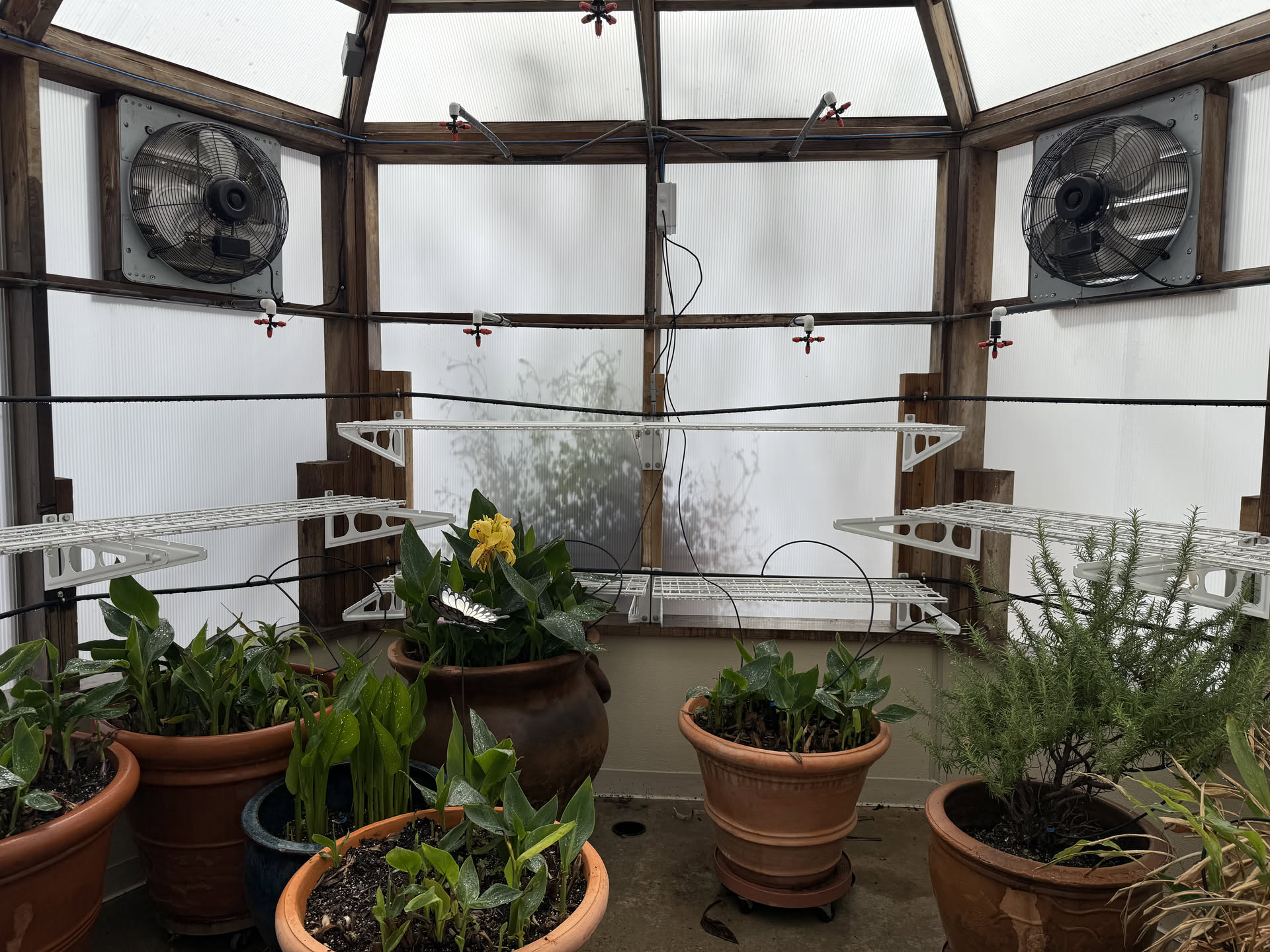
Verdify is managing a hard physical climate problem, not a thermostat demo. A 367 sq ft greenhouse in Longmont, Colorado, at about 5,090 ft elevation gets strong high-altitude sun, dry afternoon air, cold nights, and fast daily swings. The ESP32 controller influences that climate with heaters, exhaust fans, a motorized vent, fog, mist zones, grow lights, and water systems; the AI planner can only adjust bounded tactics documented in AI-Writable Tunables.
The recurring tradeoff is simple: cooling wants outside air, while VPD control often wants the greenhouse sealed and humid. Forecasts shape that posture, but they are imperfect; see the forecast page for current risk windows and recent forecast misses. Known limitations are tracked on Known Limits.
What The Equipment Can Change
| Climate pressure | Equipment path | What it can influence | Hard limit |
|---|---|---|---|
| Cold nights | Heat 1 electric heater, Heat 2 gas furnace | Minimum air temperature and overnight crop protection | Glazing losses and outdoor lows |
| Solar heat | Exhaust fans, motorized vent, shade/structure | Heat rejection and air exchange | Outdoor temperature, solar load, airflow geometry |
| High VPD | Fogger, south/west/center misters, closed-vent strategy | Humidity retention and evaporative cooling | Longmont dry air and available water contact time |
| Zone imbalance | Fan lead selection, mist-zone choice, vent timing | Which part of the greenhouse gets the next correction | Fixed structure, tree shade, plant density |
| DLI gaps | Grow lights | Supplemental light for hydro/shelf crops | Solar angle, fixture placement, electricity cost |
Live Climate Pressure
These public panels keep the climate page focused on the variables plants actually experience: air temperature, VPD, and incoming solar pressure. Runtime, relay state, cycles, and device-level diagnostics live on Operations.
Solar irradiance is a trend, not a current-value proof card. At night it should read near zero; what matters for control is the last day and next two days of solar heat load.
Safe Bands Vs Reality
The translucent green band is the crop-safe temperature target. The indoor line shows what the greenhouse actually did; outdoor actuals and forecast show how much help or opposition the controller is getting from the weather. Heater, fan, and fog markers show which equipment path was active while the temperature moved.
VPD is the harder story. On dry spring afternoons, opening vents may lower temperature while pushing VPD higher. Mist and fog markers show when Verdify tries to buy back humidity or evaporative cooling, but the outdoor VPD line shows why some periods can only be managed, not eliminated.
Control Paths
Temperature and VPD are coupled, so the controller does not have a single “make it better” lever. Heat protects cold nights. Fans and venting reject solar heat but can import dry air. Fog and misters recover humidity and sometimes add evaporative cooling, but they also consume water and can fight ventilation. The AI planner writes bounded targets and tactics; the ESP32 decides which relay state is safe every 5 seconds.
For runtime, cycles, equipment-now, and device-level diagnostics, use Operations. For cost and circuit-level usage, use Resource Use.
Zone Behavior
The greenhouse is not one climate. South is the hardest hot-zone problem. East stays cooler because of tree shade and patio-door ventilation. West is flexible but swings harder in late afternoon. The heat spot rotates through the day, which means averages hide the real plant experience.
Where To Go Next
The physical shell and altitude assumptions are documented in Physical Structure. The safety boundary is documented in Why the AI Does Not Control Relays. The exact planner-controlled climate knobs are listed in AI-Writable Tunables, the current weather input is on Forecast, known caveats are on Known Limits, and the resource-use story lives in Resource Use.