North Zone
Does not count toward the launch active-control crop total.
No planting positions and no occupied north-zone crop records.
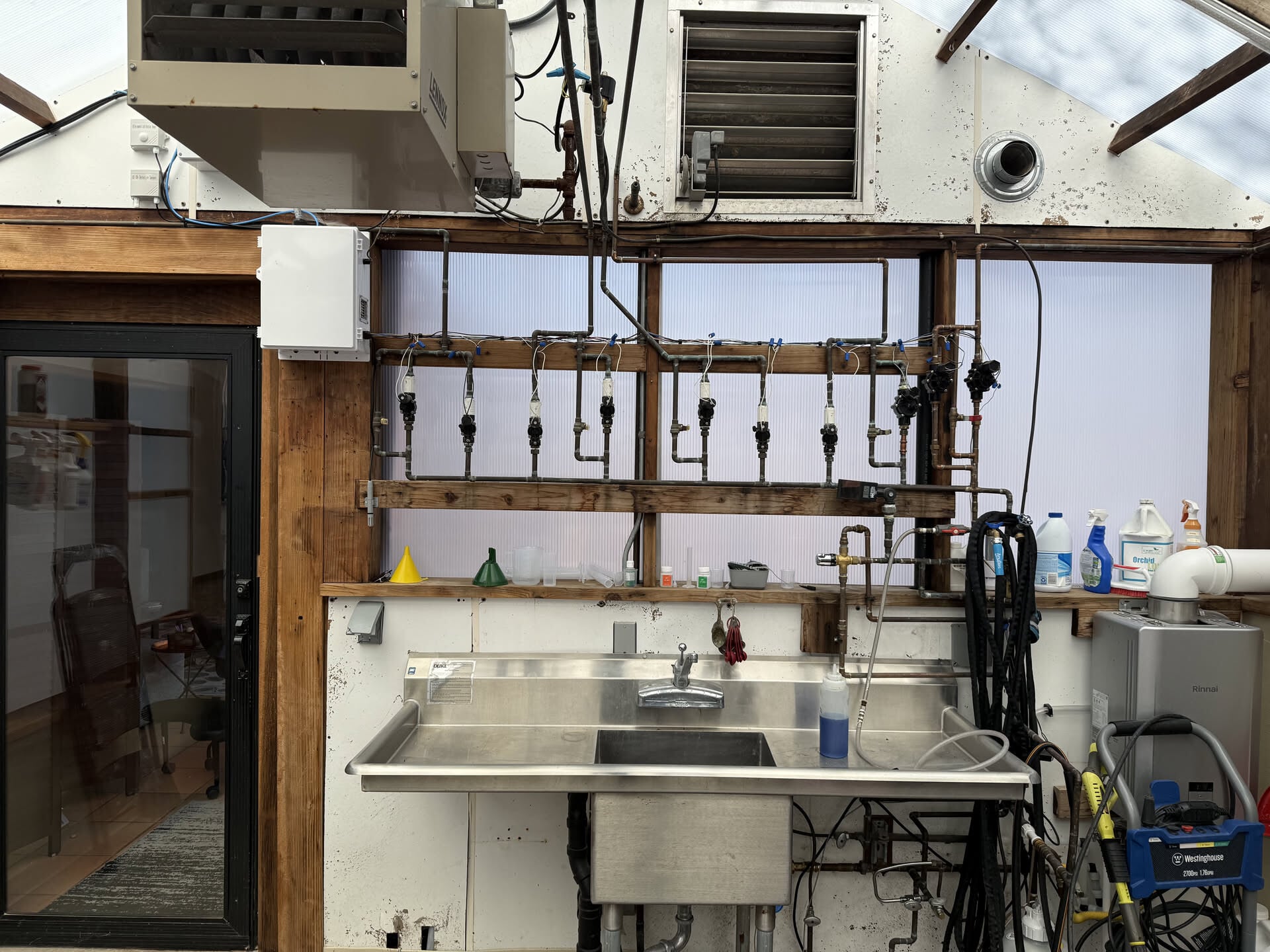
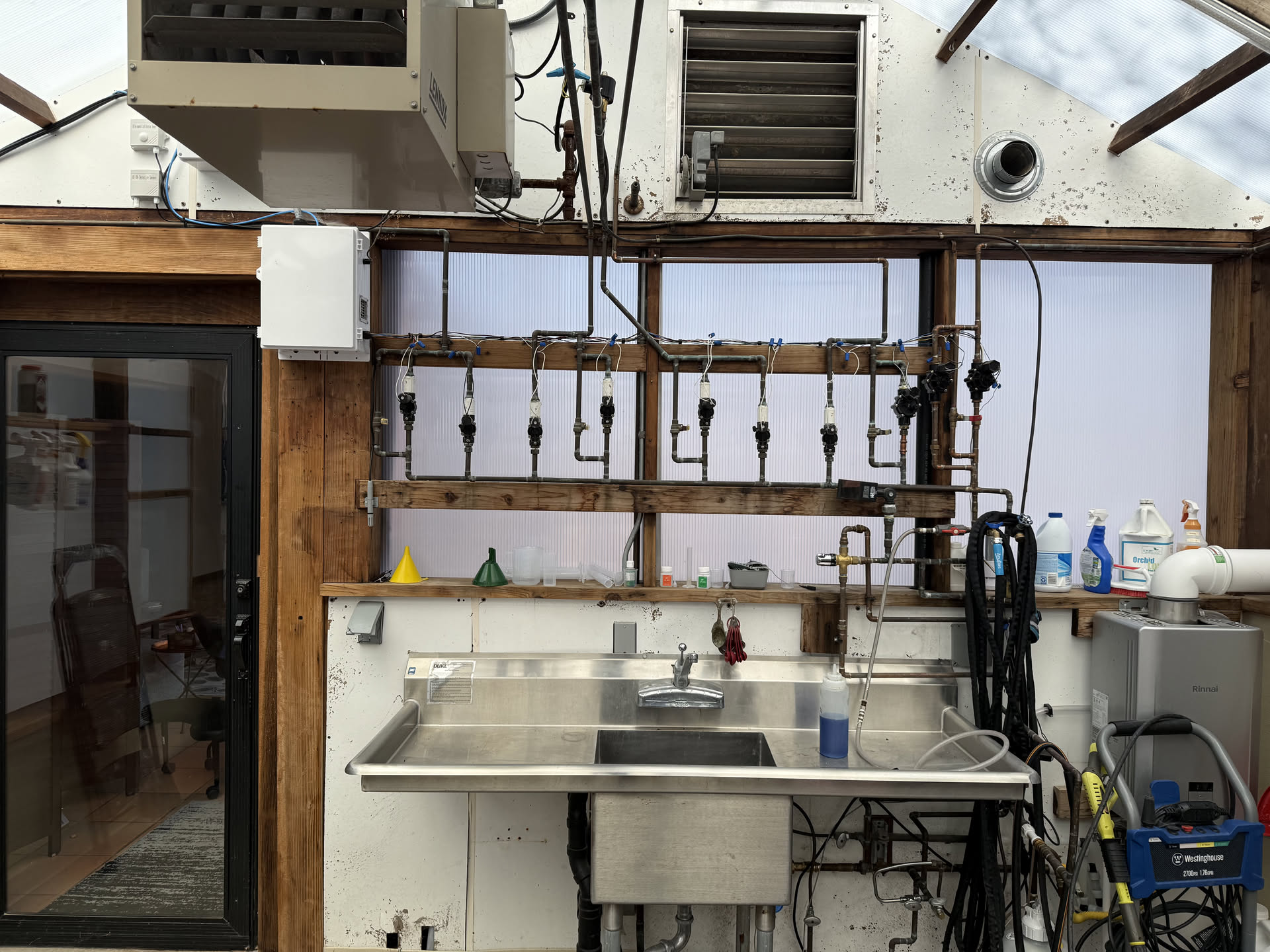
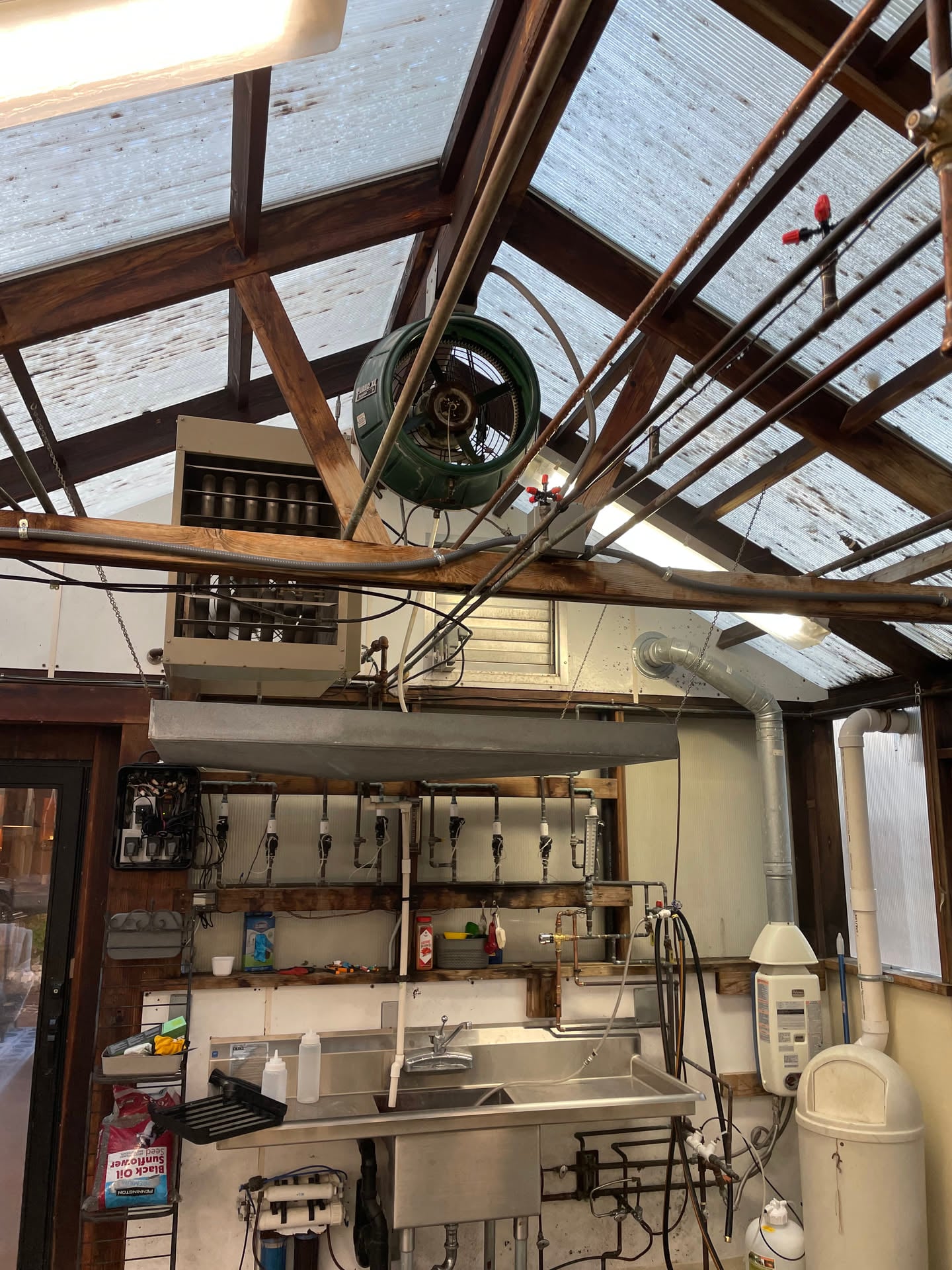
Intake, heating, water, and controller infrastructure shape the greenhouse but do not define crop target bands.
Climate Profile
| Metric | Value | Context |
|---|---|---|
| Temperature | Buffered by house. Warm afternoon (93°F+ peak PM). | House thermal mass stores heat, releases in afternoon |
| Overnight | ~68°F floor without heaters | House heat leaks through shared wall |
| Humidity | Variable | Intake vent introduces outdoor air here |
| Light | Lowest natural light (north-facing) | Behind the peaked roof ridge |
The 2 PM Anomaly
On March 25, the north zone hit 93.6°F at 2 PM — hotter than the south zone’s 85.2°F at that hour. The south zone had already peaked and was cooling via exhaust fans. The north zone, buffered by the house’s thermal mass and far from the fans, retained its heat longer. This means average temperature overstates the stress in growing zones and understates it in the equipment zone.
Physical Layout
| Feature | Details |
|---|---|
| House door | Interior door to bar/sunroom. Always closed. Passive thermal bridge. |
| Intake vent | 24”×24” (4 sq ft opening). Mechanical actuator with screen. pcf_out_2 pin 5. |
| ESP32 controller | Kincony KC868-E16P board. Network address withheld. |
| Relay panels | PCF8574 I/O expanders → SSR-25DA solid-state relays |
| Camera | Internal visual monitoring. Model withheld. |
Airflow Role
The north wall is the air intake side of the greenhouse’s airflow path:
North (intake vent + house door)
  → Center (fog machine)
    → South (exhaust fans)
When the economiser gate determines outdoor enthalpy is lower than indoor (cooler and/or drier outside), the vent opens to pull in free cooling. When the vent is closed, the house door still allows passive heat exchange through the shared wall.
Shelves
No shelves defined for this zone.
Equipment
vent (Intake Vent)Kind: vent; Model: Mechanical actuator; Watts: 10W; Cost/hr: USD 0.001
Water Systems
No water systems in this zone.
Current Plantings
No active crops in this zone.
Sensors
climate.northKind: climate_probe; Protocol: modbus_rtu; Model: Tzone RS485 (SHT3X); Addr: configured
Note: The CO₂ sensor and lux sensor (not in the per-zone DB list above — they route through shared greenhouse entities) are positioned in/near the north zone, reading greenhouse-average rather than zone-specific values.
Thermal Buffer Value
The house connection is the greenhouse’s most valuable passive climate control feature:
| Scenario | Effect |
|---|---|
| Cold winter night (20°F outdoor) | House leaks heat → greenhouse stays ~68°F floor without heaters on moderate nights |
| Moderate spring night (45°F) | No heaters needed at all — house heat maintains setpoint |
| Hot summer day (95°F) | Minimal effect — house AC doesn’t reach greenhouse meaningfully |
| The north wall acts as a thermal flywheel, damping temperature swings. Combined with the concrete slab’s heat storage, this gives the greenhouse surprisingly good overnight thermal retention. |
Zone Profile
Slug north; status active.
Sensor Modbus addr 2.
Recorded/known peak temperature.
Active crop records. Position scheme: —.