The Greenhouse
Verdify runs in a real 367 sq ft greenhouse in Longmont, Colorado. The building is small, but the control problem is not: an elongated six-wall polycarbonate shell, high-altitude dry air, strong solar gain, a concrete slab, mixed crops, misters, fans, heaters, fog, grow lights, drip irrigation, and hydroponics all interact at once.
The useful fact is that the room is not uniform. South runs hotter and drier. East is cooler and more humid. West is flexible but gets late-day sun. The controller and planner use those differences instead of pretending the greenhouse has one climate.
This page is the human-scale tour. The full measurement model, dimensions, glazing, airflow, solar geometry, and thermal envelope live on Physical Structure. The live visual context is on Greenhouse Cameras, and the planner can only act through bounded parameters listed in AI-Writable Tunables.
Physical Snapshot
Interior growing and equipment footprint.
Tall peaked-roof air volume.
Longmont elevation; altitude changes VPD and airflow behavior.
Long east/west walls plus a faceted south end.
Verdify is best understood as a narrow production room wrapped around a service wall. The north wall connects to the house and carries heat, water, intake air, the utility sink, the irrigation manifold, and the ESP32 control hardware. The east wall holds the patio-door intake path and NFT hydroponics. The west wall is the long shelf and grow-light wall. The faceted south end is the hot, bright exhaust end with fans, wall misters, floor pots, and the strongest solar stress.
The structure page has the exact wall lengths and thermal math; this page explains why those facts matter operationally.
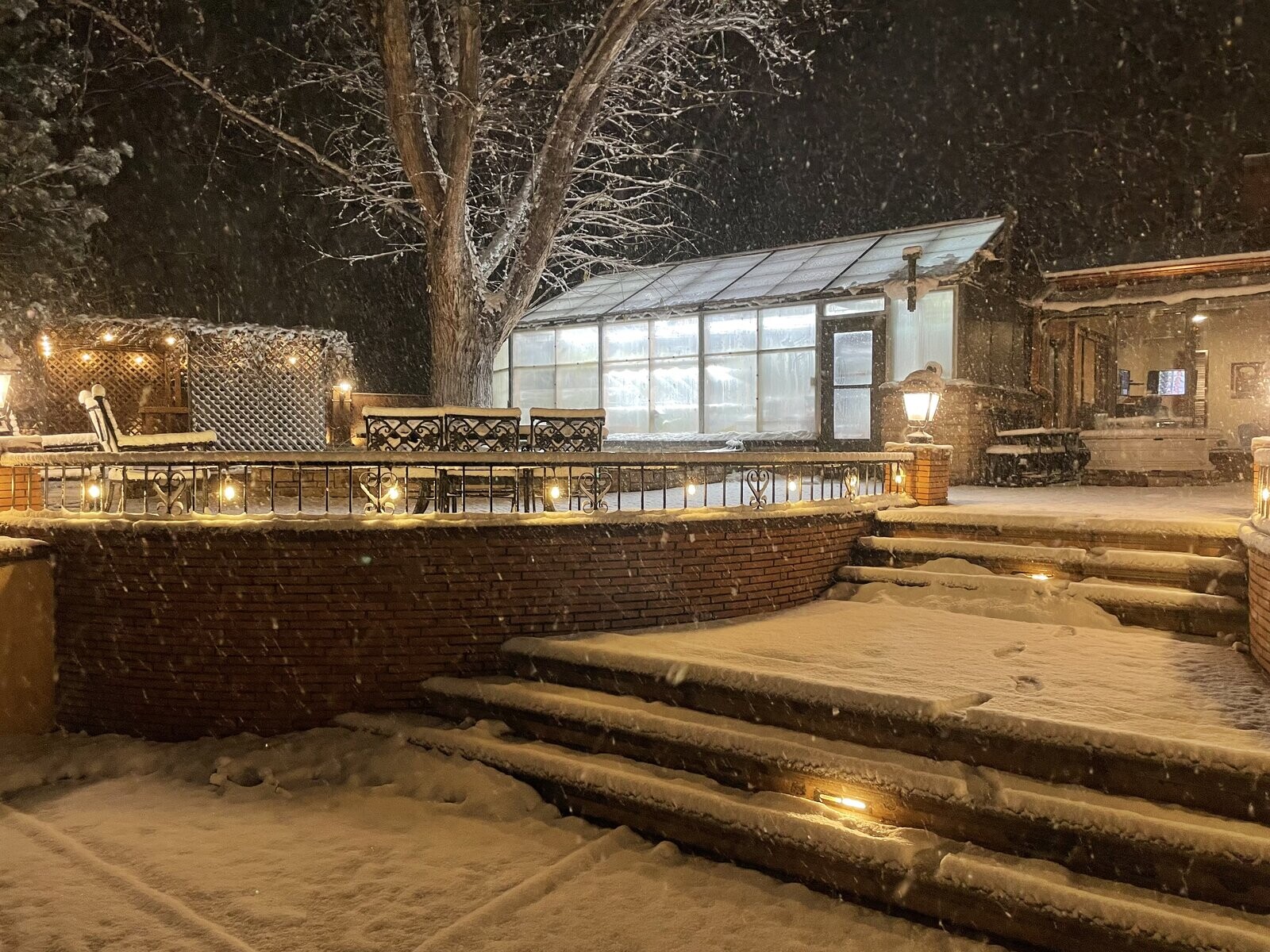
The six-wall shape creates different solar angles through the day. The south faces take the peak heat load. The east wall gets tree shade and supports the hydroponic system. The west wall has the longest shelf run and the strongest artificial light coverage.
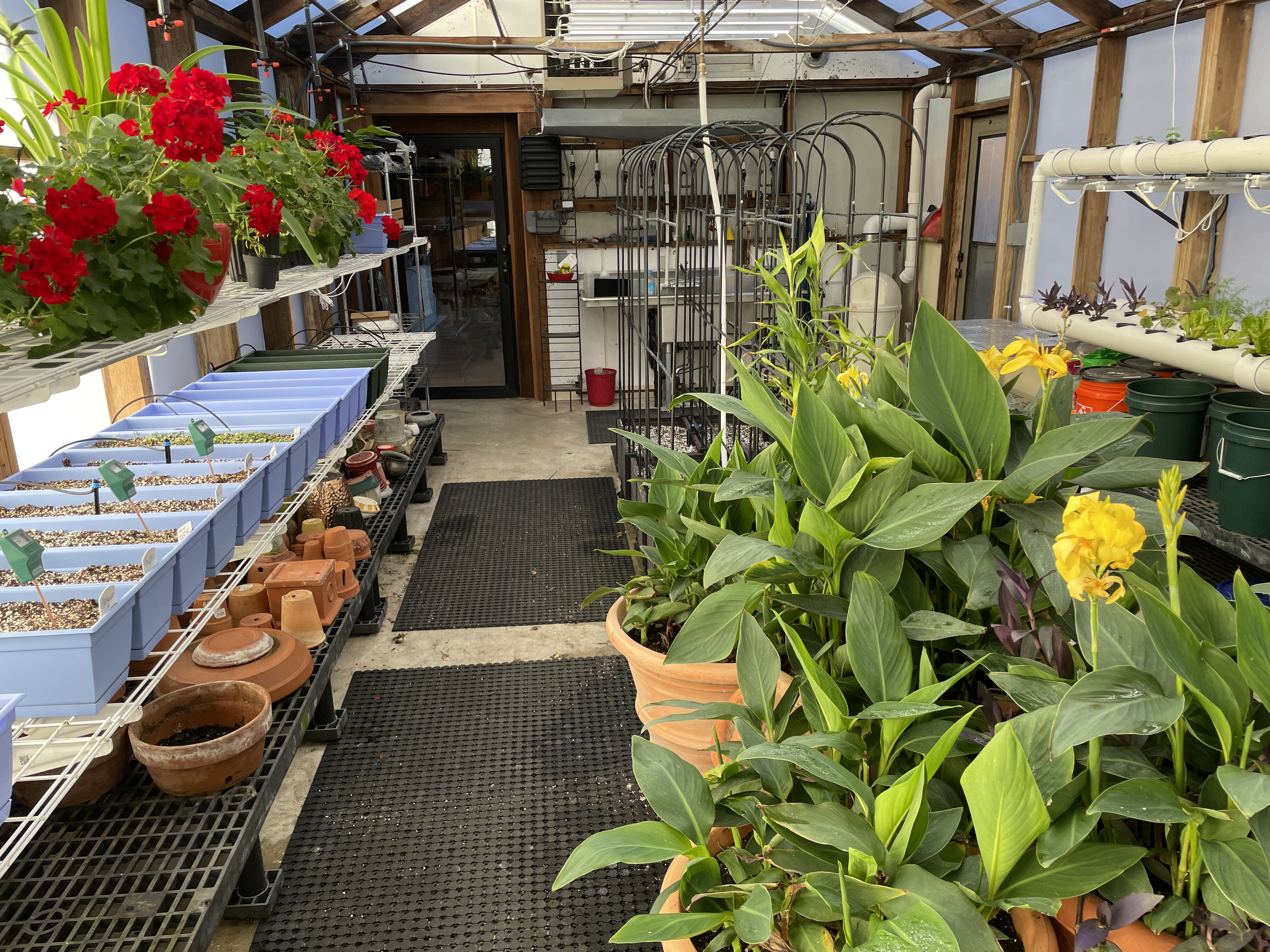
Inside are hydroponic NFT channels, shelf bays, floor pots, overhead misters, circulation fans, exhaust fans, heaters, fog, grow lights, and a dense sensor/control network.
How The Room Is Organized
The greenhouse has five practical areas, not one generic “inside”:
- North service core: heat, water, intake vent, irrigation manifold, utility sink, ESP32 controller, and relay hardware.
- East growing wall: patio-door intake path, workbench, hydroponic NFT channels, reservoir, seedlings, greens, and strawberries.
- West shelf wall: long production run with shelf starts, herbs, cucumbers, flexible crop space, and dense grow-light coverage.
- South exhaust end: highest solar load, two angled exhaust fans, wall misters, hotter crops, and the fastest thermal swings.
- Center aisle/reference zone: circulation path, fog influence, camera-visible crop checks, and average-reference sensing.
The two public camera snapshots help readers see those areas without exposing the private camera system. They are evidence context, not a control input; the ESP32 still owns relay decisions locally.
Microclimates
| Microclimate | Zones | Character |
|---|---|---|
| Hot and dry | South | Peak solar load, exhaust path, heat-loving crops. |
| Cool and humid | East | Tree shade, hydroponic evaporation, leafy greens and strawberries. |
| Flexible | West | Long shelf wall, strong grow-light coverage, starts and mixed crops. |
| Utility/reference | North, Center | Equipment wall and center reference zone. |
Detailed generated zone profiles remain available for the full sensor, equipment, water, and planting inventory: all zones.
What Makes It Hard
The greenhouse admits more solar heat than useful plant light. The glazing, slab, altitude, and Colorado dry air create a recurring tradeoff: cooling wants outside air, but humidity control often needs the greenhouse sealed.
On hot sunny days, software cannot fully overcome the physics. Fans can move a lot of air, but they cannot cool below ambient. Misters and fog can reduce VPD, but venting can remove that humidity in minutes. External shade cloth remains the most important physical upgrade.
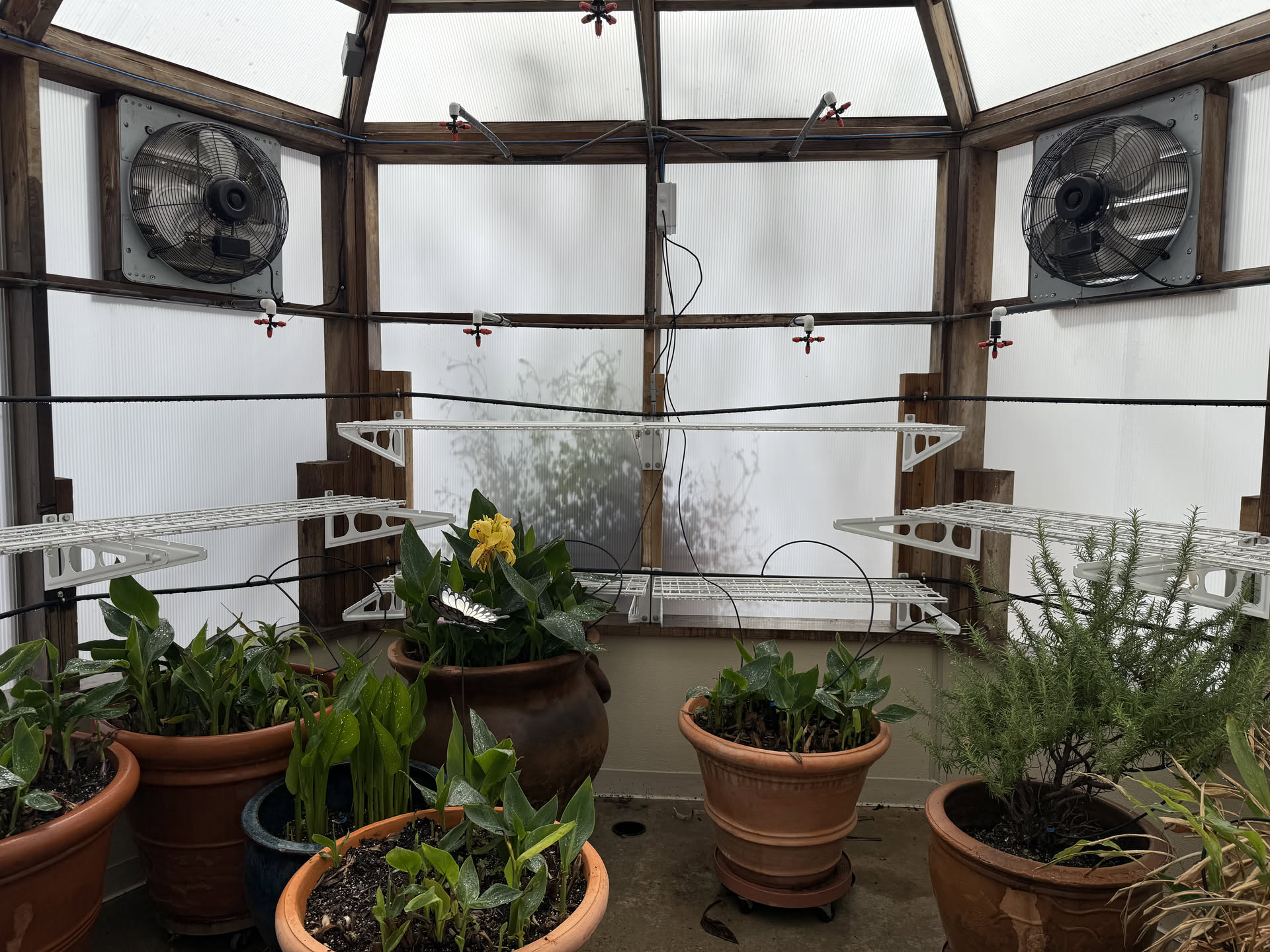
The hard part is that every correction has side effects. Venting sheds heat but imports dry air. Misting recovers VPD but uses water and can disappear quickly if fans are running. Gas heat protects cold nights but changes the cost story. Grow lights help DLI but add heat and electrical load.
That is why the greenhouse overview links outward: Climate Control explains temperature and VPD behavior, Operations shows runtime and relay burden, and Physical Structure explains the geometry and thermal envelope behind the limits.
Growing System
The current growing system mixes hydroponics and soil:
- East: recirculating NFT hydroponics for leafy greens and strawberries.
- South: floor pots and hotter crops.
- West: shelf starts, herbs, cucumbers, and flexible production.
- North: equipment, manifolds, and utility hardware.
The crop profiles and zone records are generated references. They should support the main story, not dominate it.
Reference Pages
- Physical structure: dimensions, glazing, thermal envelope, and light transmission.
- Greenhouse cameras: high-resolution source-stream snapshots for visual context.
- Equipment inventory: relays, sensors, pumps, valves, heaters, fans, lights, and misters.
- Growing and crops: crop placement, hydroponics, and plant stress context.
- Soil sensors: root-zone moisture, temperature, EC, and the irrigation story beneath the climate loop.
- Generated lessons: validated operational lessons from planning cycles.