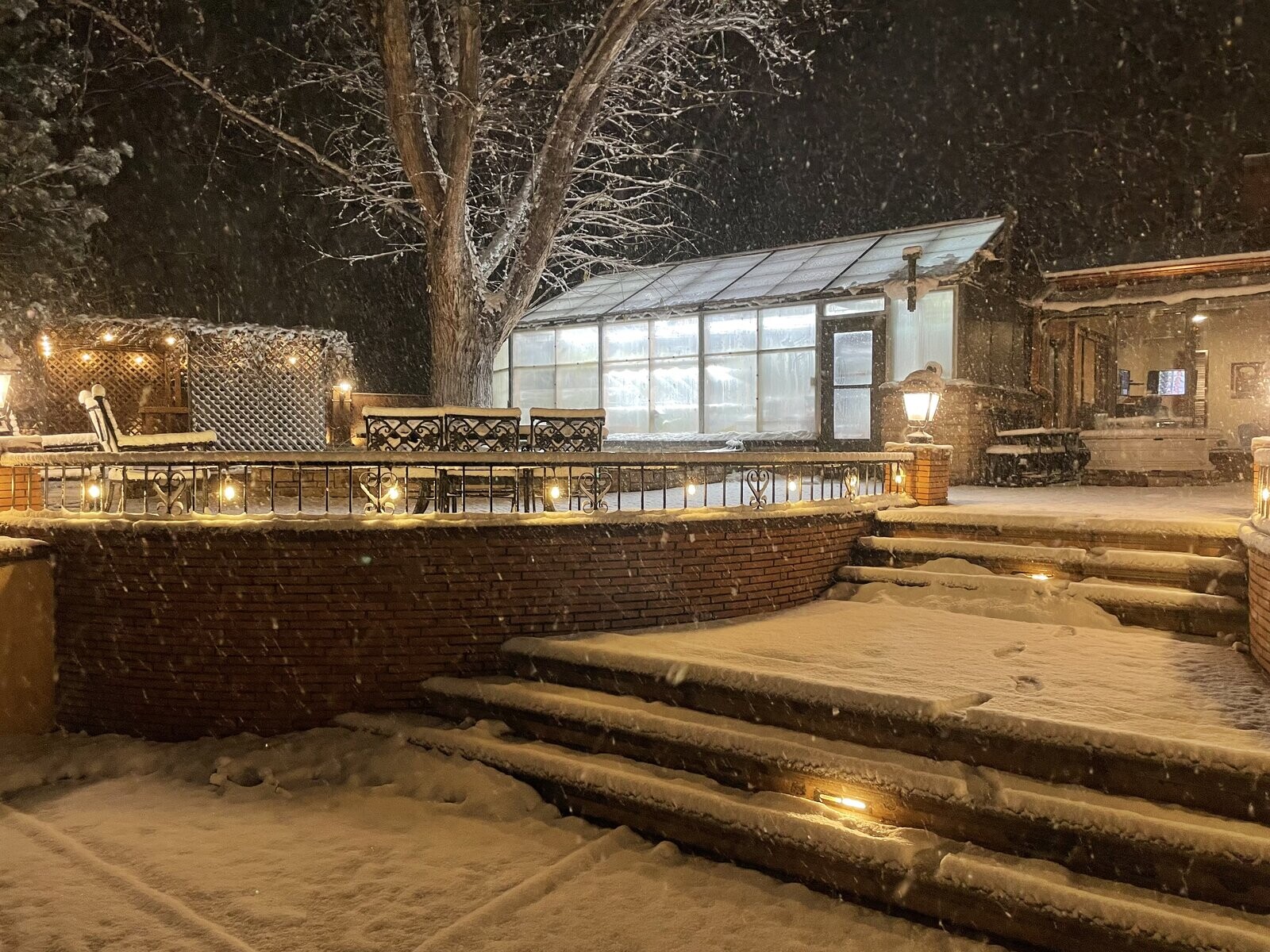
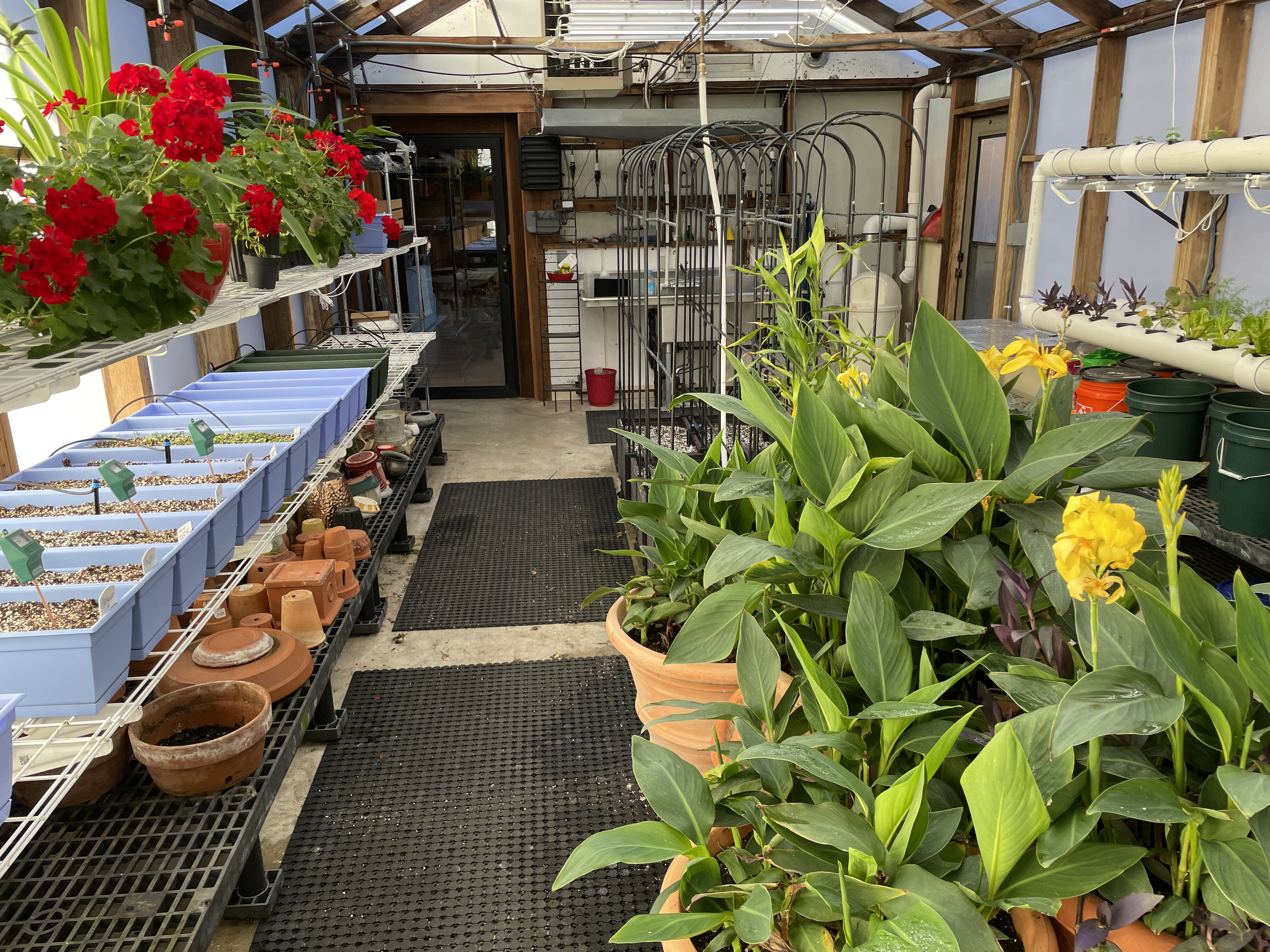
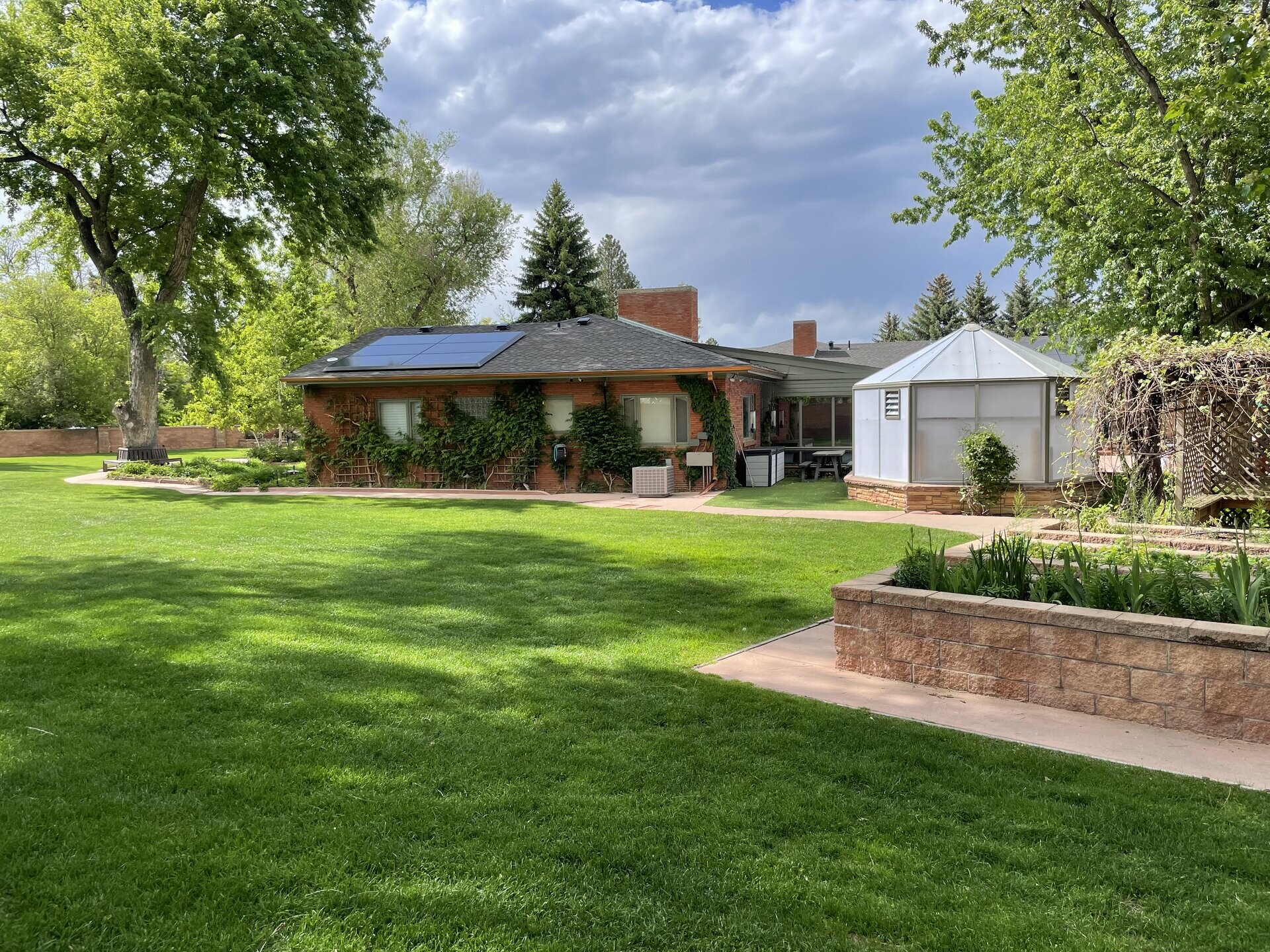
We built a real greenhouse in Longmont, Colorado where an AI planner proposes bounded climate tactics, but an ESP32 controller, not the AI, owns the relays.
We publish the plans, telemetry, failures, costs, lessons, and scorecards so readers can check whether Verdify works instead of taking the claim on trust.
Right Now
The panels below are live Grafana trends from the public read-only telemetry path. They show 72 hours of observed greenhouse climate plus the forecast window Iris (our OpenClaw AI agent) is planning against.
This is the control loop in one view: the green bands are the crop target envelope, the lines are observed and forecast climate, and the event markers show firmware relay actions. The ESP32 still owns the physical state machine.
VPD means vapor pressure deficit: how hard the air is pulling water from plant leaves. High VPD is dry-air stress; low VPD means the greenhouse is too humid for healthy transpiration.
The AI does not control hardware directly. Iris writes documented AI-writable tunables: bounded setpoint biases, mist/fog limits, venting posture, and climate tactics. A dispatcher validates them. The ESP32 firmware decides relay state every 5 seconds.
What To Look At First
The April 22-25 planner-offline window is compared with the following Iris-online window.
The planner writes intent. The dispatcher validates it. The ESP32 decides equipment state locally.
Public receipts include daily plans, scorecards, stress hours, water, energy, costs, failures, lessons, and sample exports.
Why This Is Worth Checking
The greenhouse sits at 5,090 feet in Boulder County: cold nights, intense sun, dry spring air, summer heat, winter snow, and fast shoulder-season swings.
OpenClaw routes Iris through local Gemma 4 26B A4B (MoE) inference for routine planning, with explicit cloud escalation only for heavyweight reviews.
Iris writes bounded climate tactics. The ESP32 safety controller owns the 5-second relay state machine.
Evidence pages publish live state, plans, scorecards, costs, failures, lessons, and sample data so readers can inspect the claims.
Slack Ops turns plans, deviations, reminders, and operator tasks into human-readable messages without making Slack a safety layer.
Resource Use separates solar timing, electricity, gas, and water so the environmental story does not hide the remaining utility bill.
What It Claims Now
Iris writes bounded plans, the ESP32 enforces safety every 5 seconds, and public receipts show climate, stress, cost, water, failures, and lessons.
The current public proof layer focuses on automating the greenhouse systems safely: climate tactics, relay-boundary enforcement, telemetry, costs, failures, and lessons. Yield attribution, profit optimization, and broader autonomy need more harvest records, crop-stage normalization, and comparable baselines before they become claims.
Improvement
Verdify publishes the evidence behind its claims: live state, current plan, scorecard history, costs, failures, and generated lessons. The claim is falsifiable: if Iris writes poor tactics, the daily plan, scorecard, stress hours, water use, and lesson record show it.
This is the planner audit. Compliance is measured as samples inside the temperature band, the VPD band, and both bands at once. Stress is measured in hours. A useful planner is not judged by how often it writes plans; it is judged by whether those plans move the greenhouse closer to target while respecting water, energy, and physical limits.
The launch baseline is explicit: Baseline vs Iris compares the April 22-25 planner-offline window with the following Iris-online window. It is an operational comparison, not a controlled A/B test.
Start Here If You Are Skeptical
- Does it work? Baseline vs Iris.
- Is it safe? Why the AI does not control relays.
- What are the known limits? Known Limits.
- How are firmware changes guarded? Firmware Change Protocol.
- What can the AI set? AI Tunables Traceability.
- How is the agent configured? OpenClaw and local inference.
- How do humans work with the bot? Slack operations.
- How does solar alignment affect the cost story? Resource Use.
- Can I inspect data? Sample CSVs and planning archive.
- Can I rebuild the pattern? Build notes and public-safe architecture notes.
- Want to compare notes or report a correction? Contact Jason.