Map Expertise
Understand the workflow, systems, knowledge sources, people, decisions, exceptions, and judgment patterns that create value.
Method
A practical way to move from "Can AI help here?" to "Can this organization turn its people, workflows, knowledge, feedback, and outcomes into durable AI advantage?"
Understand the workflow, systems, knowledge sources, people, decisions, exceptions, and judgment patterns that create value.
Decide how knowledge, AI model output, human review, telemetry, feedback, and outcomes become an organization-owned improvement system.
Implement one narrow workflow where people and AI collaborate while source authority and approval paths remain explicit.
Test quality, exceptions, private evals, reviewer signal, and mission or operating impact against the organization's standards.
Turn corrections, traces, decisions, and outcomes into reusable signal before expanding authority.
Operating model
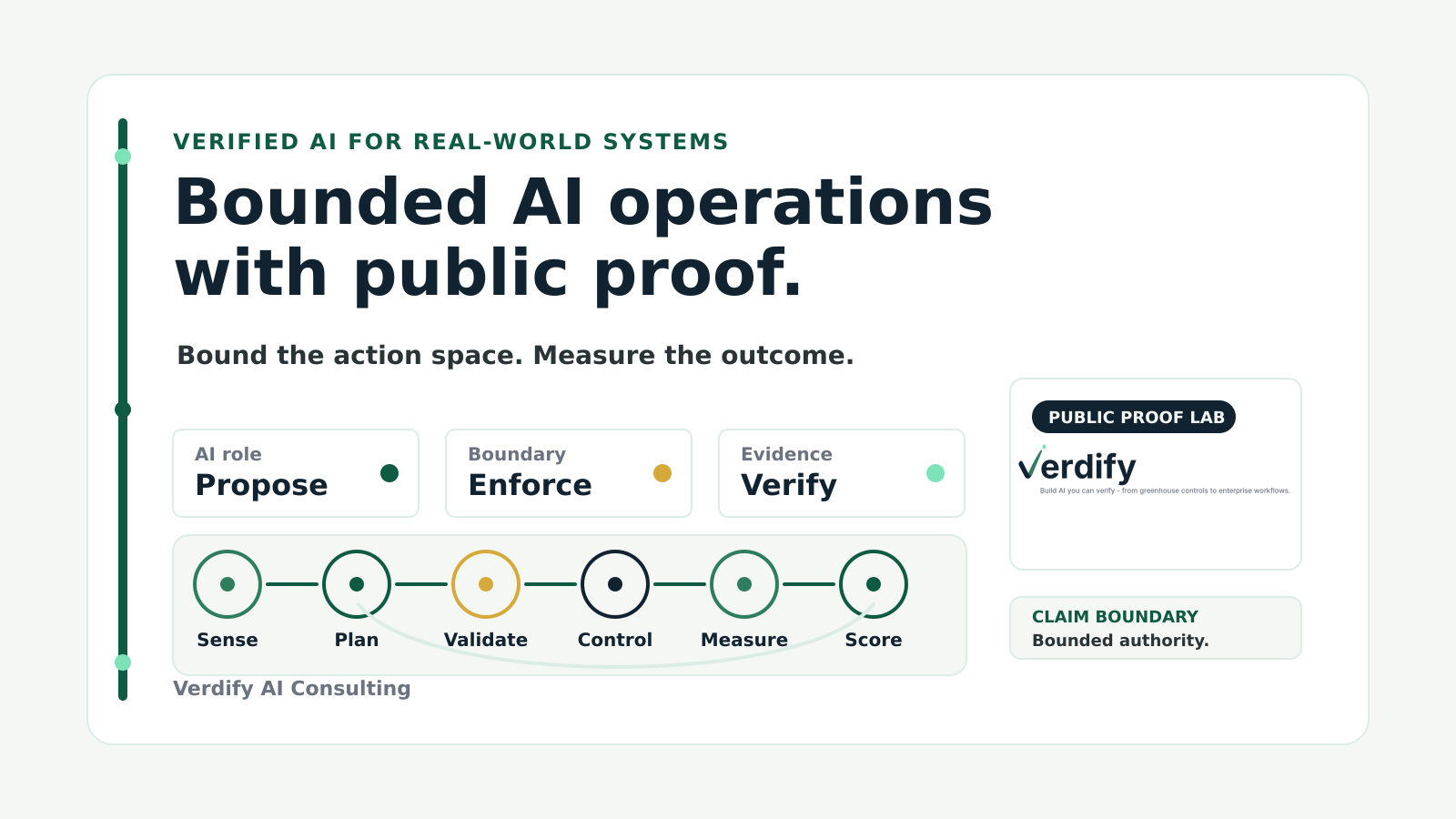
The same operating model applies across software, quality, field service, procurement, telemetry, and proof-lab workflows: preserve knowledge, capture expert judgment, measure outcomes, and improve only when the evidence supports it.
Knowledge architecture
A workflow map is incomplete until the team understands what information exists, who owns it, which parts are trustworthy, how it is classified, and how expert review improves it.
Documents, tickets, policies, telemetry, spreadsheets, system records, prior decisions, and operating lessons are mapped with owners, freshness, sensitivity, and access rules.
Records are grouped by operating meaning, source quality, decision use, customer or asset context, and whether they support answers, reports, dashboards, or workflow actions.
The knowledge layer can become source-linked answers, evidence packets, reporting fields, dashboard signals, reviewer queues, private eval inputs, or workflow traces.
Missing sources, stale records, unsupported claims, restricted data, and ownerless material become visible work before AI authority expands.
Evidence from the lab
The greenhouse is the public proof environment behind the method: AI proposes. Controls constrain. People judge. Telemetry verifies. Outcomes become learning signal.
See the Live LabVocabulary
AI capital is the organization-owned capability created when expertise is encoded into workflows, knowledge systems, agents, evals, feedback loops, and proprietary traces.
Organization-specific evaluation: telemetry, scorecards, test cases, reviewer signal, source traces, exceptions, and operational impact.
Write constraints, approval paths, tool permissions, reviewer corrections, outcome labels, and runtime checks before an output affects the workflow.
Action limits
A useful AI workflow is not defined by generic AI model capability alone. It is defined by allowed and prohibited actions, human approval, system authority, telemetry, and the private eval that determines what can expand.
Turn vague AI capability into explicit permissions, approvals, evidence logs, owners, and exclusions.
Use the knowledge architecture pattern when documents, tickets, telemetry, or operating records need classification, source traceability, and durable learning signal.