The Space
A 31-year-old elongated hexagon at 4,979 feet in Longmont, Colorado. Six walls of frosted twin-wall polycarbonate, a concrete slab floor, and a peaked roof running north-to-south. 234 square feet of growing space with three distinct microclimates.
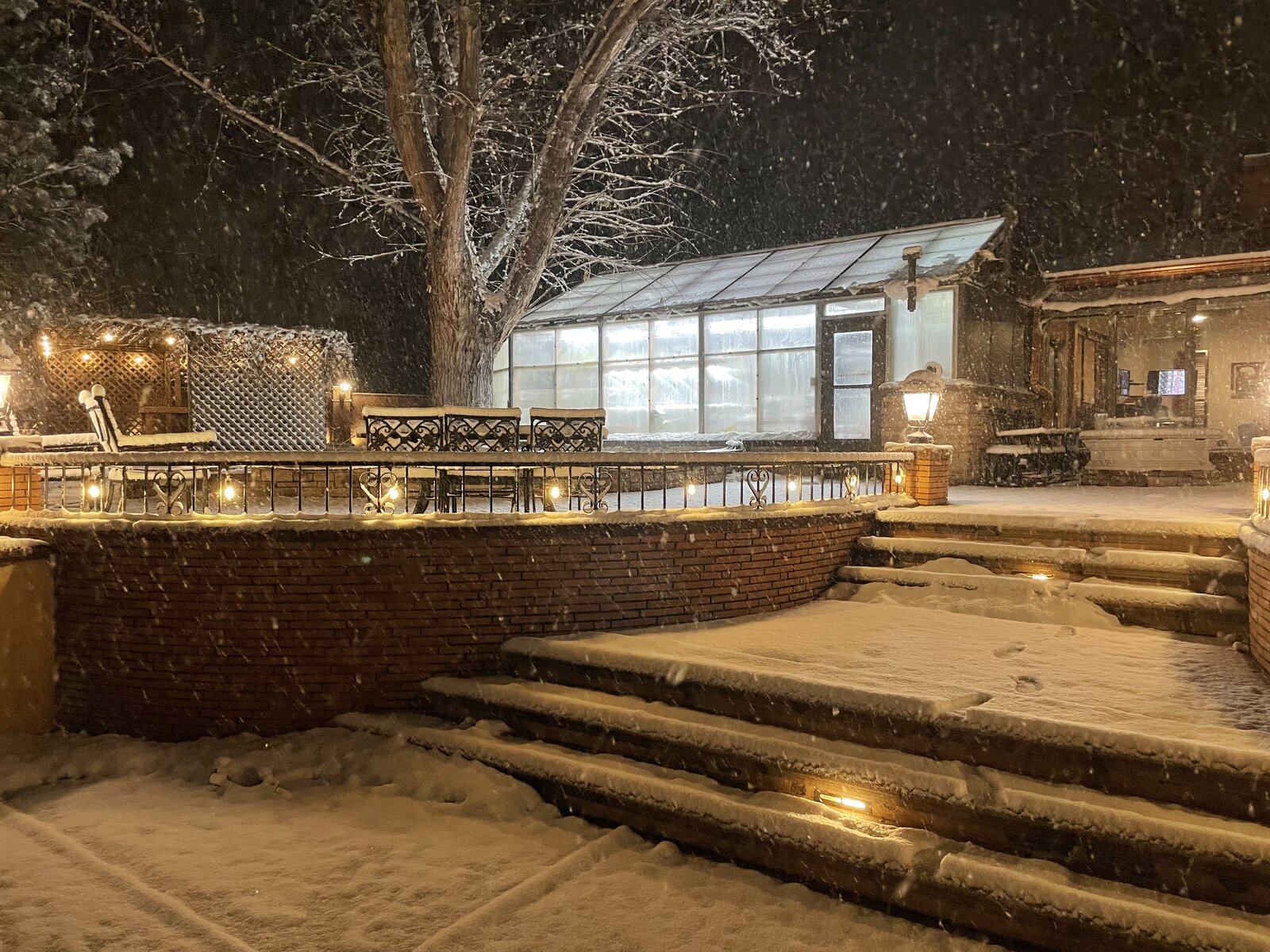
The hexagonal shape isn’t decorative — it’s structural. Six walls at varying angles to the sun create natural light and temperature gradients that we exploit for crop placement. The south wall catches peak solar noon. The southwest angle gets 23.5% light transmission — the best in the building.
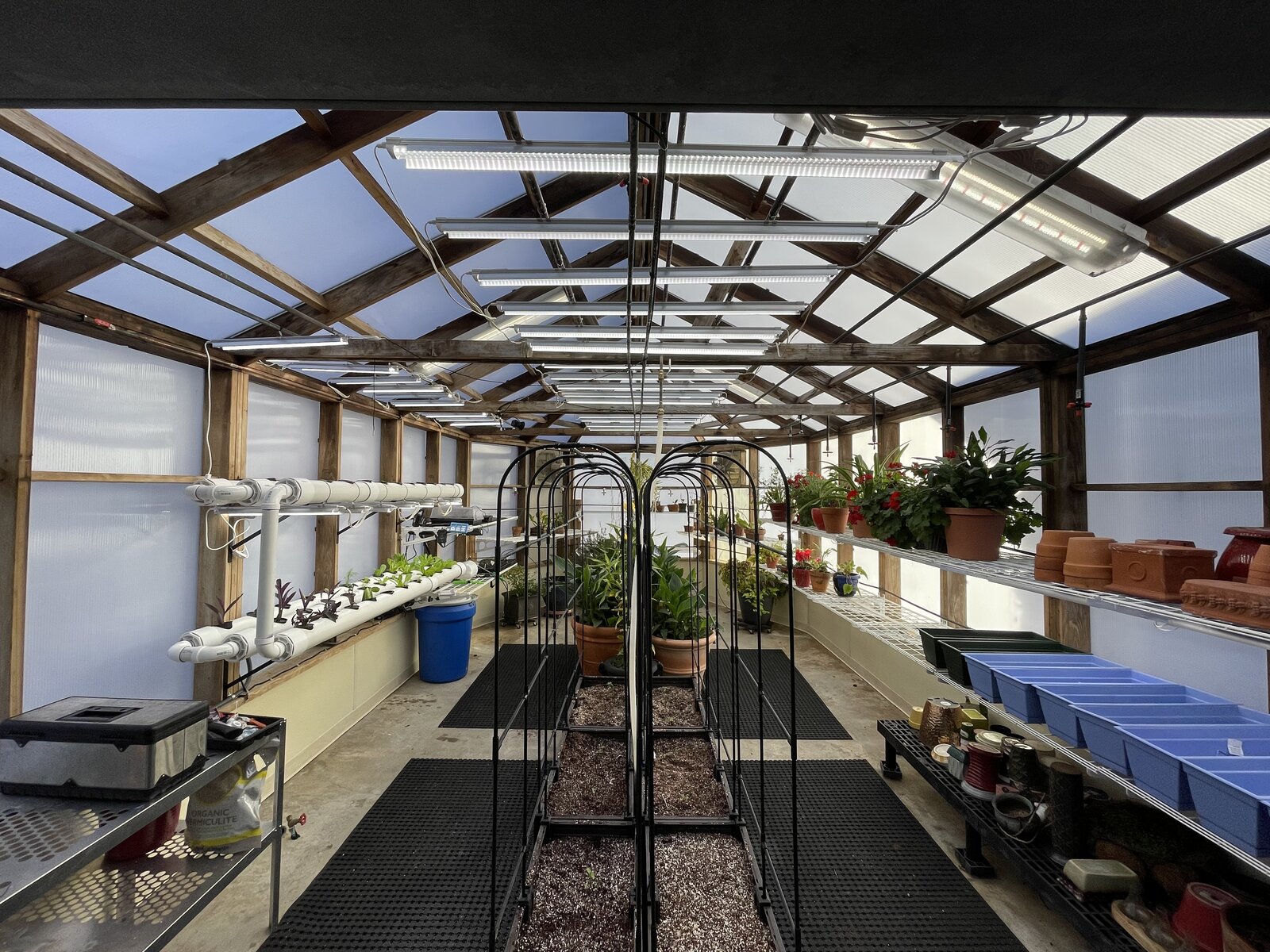
Inside: hydroponic NFT channels on the east wall, six shelf bays on the west, floor pots in the south, and 49 grow lights across two circuits. The concrete slab stores solar heat during the day and releases it overnight — free heating in winter, a liability in summer.
Three Microclimates in 234 Square Feet
At any given moment, there can be a 9°F difference between the hottest and coolest zones. This stratification is an asset — it lets us match crops to their preferred conditions.
| Microclimate | Zones | Character |
|---|---|---|
| Hot + Dry | South | Peak solar, exhaust fans, 100°F+ at noon. Peppers and tomatoes. |
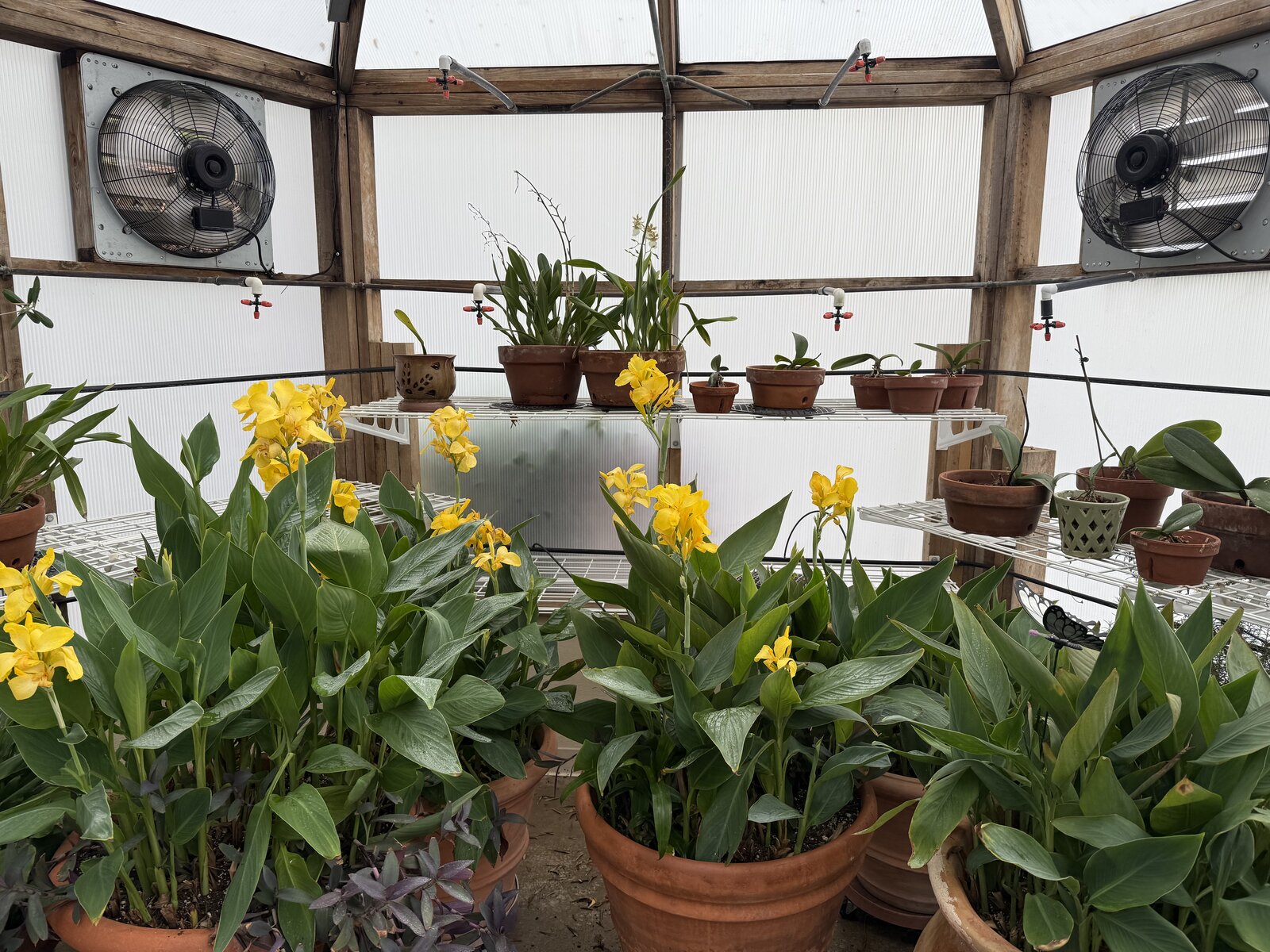
| Cool + Humid | East | Tree shade, patio door, hydro evaporation. Lettuce and strawberries. |
| Moderate | West | Longest wall, versatile. Herbs, starts, cucumbers. |
→ All five zones including North (equipment) and Center (offline).
The Defining Tension
The glazing’s SHGC (0.66) exceeds its visible light transmission (0.57). The greenhouse lets in more heat than light. At peak solar, 55,600 BTU/hr enters — but cooling capacity tops out at 22,000 BTU/hr.
Shade cloth is the single most impactful improvement possible.
Dive Deeper
- Physical Structure — dimensions, walls, doors, thermal envelope
- Glazing & Light Transmission — Gallina PoliCarb specs, measured vs theoretical
- All Zones — detailed microclimate profiles for each zone
- Hydroponics — 60-position east zone system, water quality monitoring